Bed bug thermal and chemical remediation operates by eliminating both active adult biters and unhatched eggs without locking homeowners into recurring annual contracts. Convection thermal systems elevate ambient indoor…
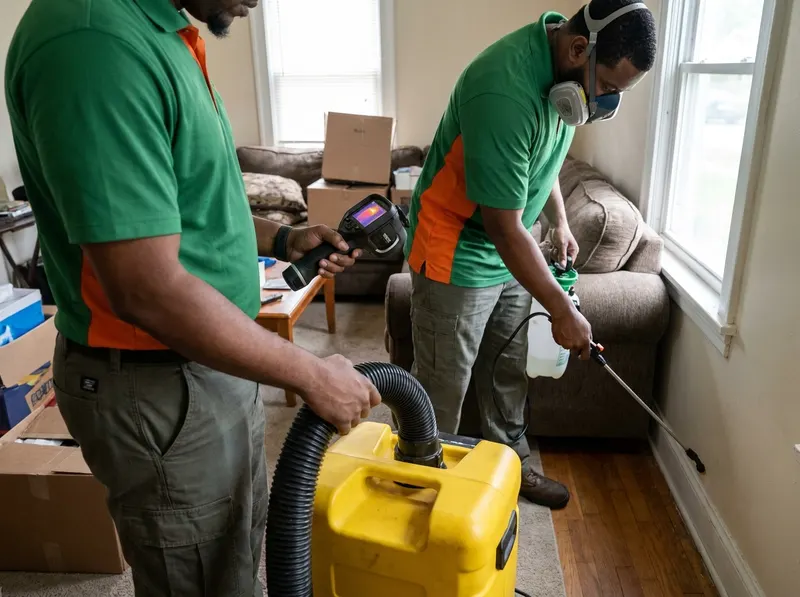
Bed bug thermal and chemical remediation operates by eliminating both active adult biters and unhatched eggs without locking homeowners into recurring annual contracts. Convection thermal systems elevate ambient indoor temperatures between 120°F and 135°F for sustained durations, penetrating deep into mattress cores, upholstered headboards, and structural wall framing where nocturnal pests nest. This thermal saturation denatures insect cellular proteins within minutes. Concurrently, targeted chemical applications using non-repellent residual liquids and silica-based desiccant dusts seal microscopic harborages, ensuring that any bed bugs surviving deep insulation voids encounter lethal residual barriers upon emerging. This prevents the sleep disruption and psychological toll caused by persistent biting cycles.
Selecting between thermal convection and chemical residual protocols depends on building construction and property layout. Whole-home heat treatments serve single-family detached homes with severe, dispersed infestations, achieving complete biological mortality in one 8-hour operational window without leaving liquid residues on fabrics. Conversely, targeted chemical remediation suits multi-unit apartment complexes or historic properties where shared plumbing chases or specific heat-sensitive building materials limit uniform thermal saturation. The trade-off centers on initial prep speed versus total visit frequency: thermal heat requires extensive preparation of heat-sensitive plastics and electronics but resolves active colonies in a single operational day, whereas chemical treatments demand less upfront item removal but require 2 to 3 targeted follow-up inspections spaced 14 days apart to interrupt hatching biological lifecycles.
Local housing architecture across Detroit dictates specific structural protocols during treatment. In historic multi-story brick homes throughout Boston-Edison, Indian Village, and Palmer Woods, deep lath-and-plaster walls and ornate radiator piping require prolonged thermal soak cycles to ensure internal structural voids reach the required 122°F kill threshold. In high-density rental flats and loft spaces across Midtown, Corktown, and Woodbridge, treatments incorporate discrete unmarked equipment profiles to eliminate neighbor scrutiny, pairing localized thermal applications with perimeter containment dusts along shared party walls to block insect migration into adjoining units. Across bungalow layouts in Rosedale Park and multi-family homes in Southwest Detroit, floor-level baseboard gaps and subfloor registers receive micro-injected desiccant barriers to prevent pests from relocating to basement rafters.
Every job gets a firm, written price after a free on-site visit.
Tell us about your bed bug thermal and chemical remediation job in Detroit and we'll send a clear, written quote, usually the same day.
 Orelvo Pest Prevention