Carpenter ant infestations compromise load-bearing studs, wall headers, and foam insulation boards by excavating smooth nesting galleries inside softened wood fibers. In historic Detroit residences throughout Palmer…
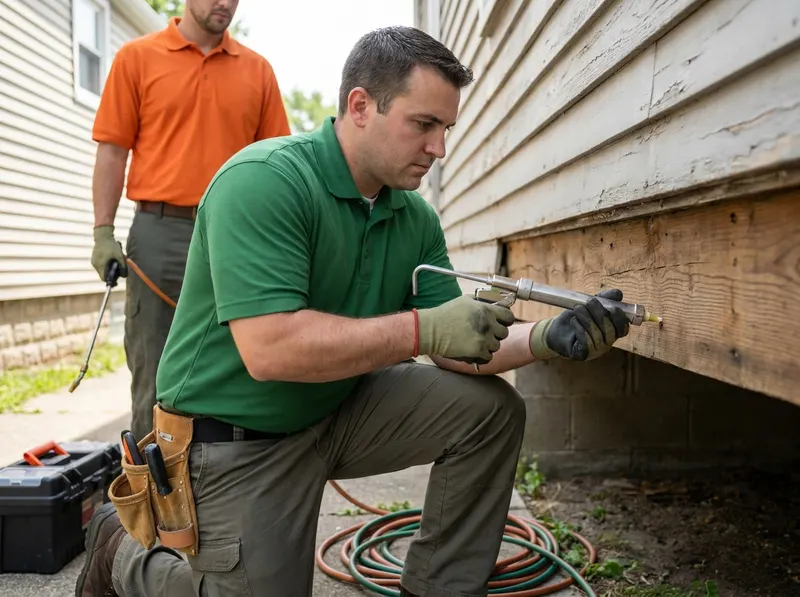
Carpenter ant infestations compromise load-bearing studs, wall headers, and foam insulation boards by excavating smooth nesting galleries inside softened wood fibers. In historic Detroit residences throughout Palmer Woods, Boston-Edison, and Indian Village, solid timber frames constructed before 1940 often develop slow moisture pockets near box gutters, flat roof transitions, and stone basement sills. Unlike termites that digest cellulose, carpenter ants do not eat timber; they systematically carve it out, leaving clean piles of pencil-shaving frass containing insect parts beneath wall outlets, baseboards, and sill plates. A targeted structural defense identifies these hidden satellite chambers rather than masking the activity with broad surface sprays that break ant trails and scatter nesting queens deeper into the building assembly.
Decision criteria depend on the age of the moisture damage and the physical evidence present within living areas. If foraging ants appear intermittently near kitchen sinks between April and June without visible frass, a localized perimeter barrier and baiting protocol resolves the seasonal satellite colony. If homeowners hear faint rustling or crinkling sounds inside drywall cavities at night in neighborhoods like Corktown, Woodbridge, or Rosedale Park, the issue involves an established parent nest inside structural framing that requires micro-drilling and targeted wall void aerosol injection. Choosing structural exclusion over continuous perimeter spraying halts permanent framing loss, though it requires homeowners to resolve underlying roof or plumbing leaks that sustain the insect colony.
Technicians conduct physical assessments using moisture meters along exterior door thresholds, porch roof attachments, and window casings common in Midtown and Southwest Detroit properties. 1. Technicians survey internal wall temperatures and framing moisture levels above 18 percent to map active nesting chambers. 2. Specialists inject non-repellent, systemic insect growth regulators and transfer insecticides into verified cavities, allowing workers to carry active ingredients directly into the queen's primary nursery. 3. Exterior perimeters receive targeted liquid micro-treatments up to 3 feet up the foundation wall. 4. Field workers seal structural utility entry pipes, masonry expansion gaps, and wood joints with elastomeric silicone sealant to prevent external forest colonies from re-establishing nests inside the building envelope.
Every job gets a firm, written price after a free on-site visit.
Tell us about your carpenter ant structural defense job in Detroit and we'll send a clear, written quote, usually the same day.
 Orelvo Pest Prevention